Christianity and Politics

Navigating the Intersection of Christianity and Politics: A Kingdom Perspective

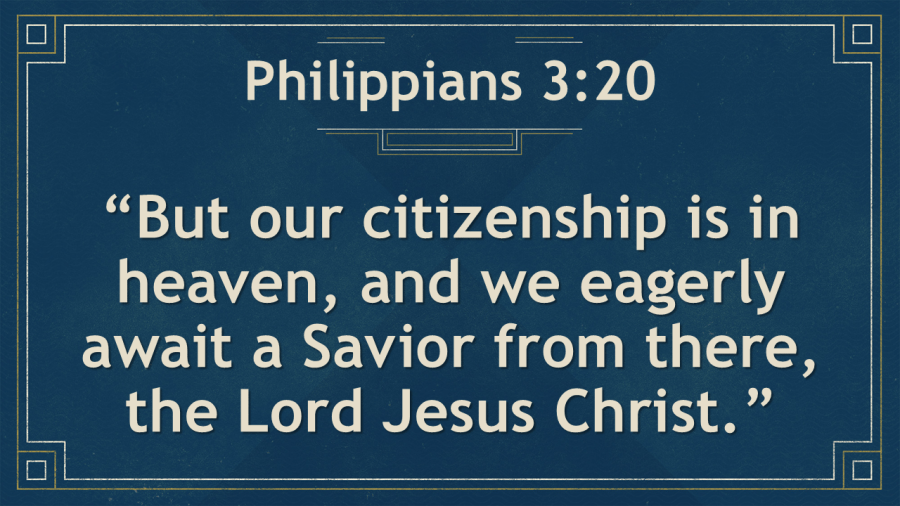
As Christians, politics can often stir strong emotions and challenge our faith. How do we engage in political life while staying true to our commitment to Christ? The key lies in remembering where our ultimate citizenship is found: not in any earthly nation, but in God’s Kingdom. As Philippians 3:20 reminds us, “Our citizenship is in heaven.” This truth shapes how we should approach politics—recognizing that while earthly governments play a role in society, our first allegiance is always to Jesus and His Kingdom.

Paul Merideth

Christ’s Kingdom transcends all political systems and ideologies. While we live in the world and are affected by its politics, we must remember that no human system can fully bring about the justice, peace, and transformation that only God’s Kingdom can achieve. Jesus Himself acknowledged this when He said, “My kingdom is not of this world” (John 18:36). As followers of Christ, we are called to engage with the world, but our engagement must reflect the values of God’s Kingdom—love, justice, truth, mercy, and humility.

Living as citizens of heaven doesn’t mean withdrawing from political or civic life. Jesus calls us to be the “salt of the earth” and the “light of the world” (Matthew 5:13-16), influencing society by living out God’s truth. In a democracy, voting is a way we exercise our stewardship, reflecting our values in the choices we make. We should vote thoughtfully and prayerfully, aligning our decisions with biblical principles, while avoiding the temptation to place our hope in political leaders or systems. Psalm 146:3 warns us not to “put your trust in princes,” reminding us that ultimate hope lies in Christ alone.

In a divided world, Christians are called to be peacemakers. Political differences can create deep divisions, but our identity in Christ should guide how we treat others, especially those with whom we disagree. We must approach political conversations with humility and grace, promoting understanding and love over hostility and division. Ultimately, our political engagement should reflect our allegiance to Christ, and our actions should point others to the hope found in Him.

To hear my sermon on “Christianity and Politics” from October 6th, 2024, presented at the Northside Church of Christ in Temple, Texas, click HERE.

Truth Decay

Paul Merideth

In today’s world, the idea of truth can feel a bit slippery. But according to Jesus, truth is something solid, something real. In John 8:32, He tells us, “You will know the truth, and the truth will set you free.” Truth isn’t just about personal opinions or perspectives—it’s about what lines up with reality. Think of it like this: Saying a cake is delicious is subjective; saying it has 250 calories per slice is objective. It’s a fact, no matter how we feel about it. While subjective truth is shaped by personal feelings and perspectives, objective truth remains constant, unaffected by individual beliefs.

For Christians, the Bible is the ultimate source of objective truth. It’s not just advice or suggestions—it’s God’s will, laid out for us to follow. In John 17:17, Jesus prayed, “Sanctify them in the truth; your word is truth.” He was asking God to help us live by the truth. Just as we rely on oxygen for life, we need truth to navigate a world filled with lies and misinformation. We don’t have to stumble through life second-guessing everything. We can trust God’s Word to guide us.

There’s a lot of noise out there, though. Society has moved away from seeing truth as fixed and often treats it like something we can invent or decide on collectively. Take Harvard University as an example. Believe it or not, it is a school that started out with a mission to train Christian ministers. Their motto was “Christ and the Church,” alongside “truth.” However, as society moved away from religious foundations, the motto was reduced to simply “Veritas” (truth). This change illustrates a broader societal trend where truth is treated as subjective or as something decided collectively rather than grounded in the reality of God’s word. But the fact is, you can’t have real truth without starting with God. Unfortunately, Harvard today has strayed far from its original commitment to the Christian worldview.

As believers, we need to be on guard. The Bible tells us to “test the spirits” (1 John 4:1) because not everything we hear is true, even if it sounds convincing. We live in a world full of echo chambers where ideas get repeated so often we start to believe them just because they’re familiar. But we need to ask ourselves: Does this line up with what God says?

At the end of the day, Scripture is our compass. It’s the standard to measure everything else. 2 Timothy 3:16-17 reminds us that “all Scripture is breathed out by God… for training in righteousness.” Our source for truth is not fleeting or fashionable, but grounded in the eternal Word of God. In a world of confusion, God’s truth stands firm. And in a world full of opinions, God’s Word is the steady source of truth we can rely on.

If you’re in the area, we invite you to come and worship with us at the Northside CHURCH of CHRIST in Temple, Texas. northsidetemple.org

Church Growth

Church growth is not merely about numbers or filling pews; it’s about nurturing a vibrant, spiritually enriched community that reflects the love and teachings of Christ. There is a dangerous misconception in the church. Many think church growth is all about getting the attendance numbers up. But while that is an aspect of growth, there is an essential correlating component that must be present—personal faithfulness. Numerical growth will only happen as a corollary consequence of the congregation’s spiritual development. I believe it’s true that faithfulness must increase in tandem with higher attendance numbers. In fact, proper church growth begins with each of us first becoming stronger in our faith. As we grow spiritually, our lives become a testament to God’s grace, drawing others to the faith. Our spiritual maturity fuels the church’s overall growth. Immature Christians in the congregation is the biggest impediment to growth.

The early church, as depicted in Acts, provides us with a powerful model of growth. Acts 2:47 tells us, “And the Lord added to their number daily those who were being saved.” This growth was not a result of marketing or strategy but the natural outflow of a community deeply committed to the teachings of Christ, fellowship, breaking of bread, and prayer.

A church that embodies genuine love and care for each member creates a magnetic force that attracts others. We must strive to build a community where everyone feels valued, heard, and loved. This love is the foundation upon which church growth is built.

This is where leadership is critically important. Church leaders must lead with love. They must point the way forward in cultivating an atmosphere of decision-making transparency, authentic compassion, and enduring commitment to the Lord.

Church growth often requires adapting to the changing needs of our community while holding firmly to the timeless truths of the gospel. Mission strategy, outreach technique, models of growth… these things will adjust and adapt with time and change. Of course, we know the gospel does not change. The story remains the same. We hold to Biblical truth unwaveringly. But our methods do change. How we deliver the gospel will adapt to the times. We must be willing to embrace new methods of ministry, technology, and outreach without compromising our core beliefs. Isaiah 43:19 reminds us, “See, I am doing a new thing! Now it springs up; do you not perceive it?”

I’ll never forget a church growth seminar I attended years ago in Lexington, Kentucky. The presenter said the strategy for strategic church growth is… Pampers, Parking, & Preaching. In other words, to grow, he said, a church needs to prioritize children’s ministry, make it convenient to park and gain access to the building, and have a dynamic pulpit minister. After the conference, a fellow minister came out and couldn’t stop saying… “We really need to update our nursery.” Another said, “Our church has got to restripe the lot.” And so, feeling the vibe of the moment, I said to the two of them, “We really need to get a new preacher.” They both looked at me and said with a laugh, “But you’re the preacher!”

Perhaps we do indeed need to seriously consider logistical ways to improve the church attendance experience. How can we make getting into the building and parking more convenient. Maybe we could update how we speak in front of the church to make it more appealing to the modern ear. Perhaps there are new ideas that we need to listen to and give credence to, new voices we need to let speak, and new leadership with a clearer vision. We must adapt to the times in legitimate ways. And most importantly, for the church to grow, we need Christians who are already part of the church to deepen their faith and thus “spread the knowledge of Christ everywhere, like a sweet perfume” (2 Corinthians 2:14-16).

In the final analysis, only God can bring growth. However, he uses Christians engaged in spiritual growth and evangelism to do it. Let’s never forget our commission: “Go and make disciples of all the nations, baptizing them in the name of the Father and the Son and the Holy Spirit. Teach these new disciples to obey all the commands I have given you. And be sure of this: I am with you always, even to the end of the age” (Matthew 28:19-20).

Paul Merideth

Jesus Took Naps

While traveling last week, I had one of those classic double takes in a Tennessee gas station. I like to notice the hats people wear, trendy ballcaps seem to be having a moment, and a guy brushed past me with a hat that said, “Jesus Took Naps.”

I don’t have much context for the slogan, besides being in the Biblebelt, but I’m happy to offer my interpretation. I decode the headwear’s advertised phrase, “Jesus Took Naps,” as an invitation to rest.

Mark 6:30-32 describes the apostles of Jesus returning to him after being out on their own for a stint doing kingdom work. They gave their report, and interestingly, Jesus said to them, “Come away by yourselves to a desolate place and rest a while.” They needed some recovery time from a grueling schedule as “many were coming and going, and they had no leisure even to eat.”

Jesus still invites us to “come away and rest a while.” When I was in the classroom, I’d often tell weary college students that sometimes the most spiritual thing they could do was take a nap. Needing rest, desiring a break, isn’t a sign of weakness or failure. Instead, it’s a reminder about our dependency upon God and the value of appropriate self-care. 

Do you need some rest? Perhaps see your sabbath time as an opportunity to sit and settle your body and spirit. See it as a time to contemplate how to draw nearer to God. Go ahead and drop into a deeper, quieter place to rest, hearing God beyond all the demands of life. Let others’ expectations and your inner compulsions grow silent as you pull back and distance yourself from the hurry.

God isn’t above messaging through trendy apparel. Perhaps atop a stranger’s head, God was giving me a subtle suggestion to come away and rest for a while. Maybe he’s sending you that message too.

Sabbath Rest

God designed us to need rhythms of rest. He even modeled it for us at the end of creation week; “Thus the heavens and the earth were finished, and all the host of them. And on the seventh day God finished his work that he had done, and he rested on the seventh day from all his work that he had done. So God blessed the seventh day and made it holy, because on it God rested from all his work that he had done in creation” (Genesis 2:1-3).

If we go too long without allowing time for refreshment and rejuvenation, we’re headed for burnout. Sometimes, the most spiritual thing you can do is rest. For some, this isn’t easy. It means suspending the constant urges to gain others’ approval, pausing the pursuit of personal perfectionism, and stopping the plates from spinning for a season. I think rest sometimes feels unnatural because we’ve lost what God has tried to teach us from the beginning; the value of sabbath rest.

In Matthew 8:23-26, Jesus rests in a boat during a torrential downpour, despite waves rising and crashing against the boat’s hull, threatening to capsize the passengers. We can take comfort in this: If the Son of God needed to take a break occasionally, so do we.

I am thankful that I have been granted the gift of a six-week sabbatical. It will be a learning adventure to discover how to take a break from ministry before ministry breaks me. The well needs a little refilling. I’ll pause from churchwork responsibilities, including preaching and teaching, to experience a period of reflection and rejuvenation. I have plans to attend a couple of ministerial retreat workshops, pursue long-delayed study projects, and practice spiritual disciplines. I ask for your prayers that I will learn afresh the value of sabbath rest.

God is good. He graciously refreshes and restores the weary. Jesus invites, “Come to me, all you who are weary and burdened, and I will give you rest” Matthew 11:28. Perhaps you’ve neglected your need to take a break. I hope you understand that God designed us to require rhythms of respite. Go ahead, get some rest.

Paul N. Merideth


Audience of One

Paul Merideth

When discussing the preaching mandate to “preach the word” (2 Timothy 4:2), I had a ministry professor who passionately warned of a great temptation. We’re tempted by an impulse to water down the truth of God’s word to make it more palatable to people’s delicate emotional sensitivities. This temptation, he said, was especially dangerous for preachers because of the urge we have to want to please everyone. No one answers the call to Christian ministry unless they have a heart for helping others, and we desperately want people to accept that help and thrive. That optimistic urge, however, runs into conflict when people stubbornly wrapped up in sin must be told to repent.

This “ministry of meaningful engagement” often requires us to change our tone from one of positive encouragement to straightforward confrontation. Sadly, it is a shift, more often than not, that leads to folks becoming unhappy with the preacher.

In the face of such a disorienting dilemma, his advice was to reorient our people-pleasing inclinations away from appeasement approaches and focus on one thing instead. He said, “Preach to an audience of one.” If our preaching honors the Lord, then we will be found to be faithful. After all, it is the Lord’s assessment of our ministry that matters most. “For am I now seeking the approval of man, or of God? Or am I trying to please man? If I were still trying to please man, I would not be a servant of Christ” (Galatians 1:10). Yes, we must “speak the truth in love” (Ephesians 4:15), but let’s not miss the point that we must speak the truth.

We live in the tension between two worlds, according to the Apostle Paul. We long for our heavenly dwelling, yet work is still needed doing here. His answer? “So whether we are at home or away, we make it our aim to please him” (2 Corinthians 5:9). Notice it carefully, “we make it our aim to please him.”

So here’s my encouragement for you today… live your life for an audience of One. Don’t opt for the life choices that are engineered to most likely fit the approval of your co-workers, friends, or neighbors, thus bringing you their acceptance. Commit instead to seek, above all, the approval of the Lord. It is his assessment of you that truly matters. And when you do that, people who recognize your love and commitment to truth will treat you with respect.


  • 18th Week of 2024 Reading: 1 PETER 1:3-4. “Blessed be the God and Father of our Lord Jesus Christ! According to his great mercy, he has caused us to be born again to a living hope through the resurrection of Jesus Christ from the dead, to an inheritance that is imperishable, undefiled, and unfading, kept in heaven for you.”
  • Prayer to God: “Heavenly Father, help me walk in Your ways and seek Your will all my days. May my life delight You as I honor You in all I do. Guide me in righteousness that I may reflect Your holiness. In Jesus’ name, AMEN.”
  • Sermon Preview: I’ll be preaching on Sunday, May 5, a sermon I’m calling “Job’s Final Exam.” God shows up and speaks out of a whirlwind and teaches Job a thing or two about just how little he knows. Then, on that Sunday evening, we’ll be finishing up our study of Job by looking at the dramatic epilogue of the narrative. You’re invited to come and worship with us.

Accepting God’s Gifts

Paul Merideth

God is excellent at giving good gifts. I can’t say that’s always been true of me. My track record for gift-giving is demonstrably defective by the sad array of useless appliances and discarded tchotchkes at our house. But God knows us so well; he knows what we need and how best to meet those needs. The gifts that God gives are wholesome, valuable, and lovely. “Every good gift and every perfect gift is from above, coming down from the Father” (James 1:17). His gifts are never a flop. Odd, then, that anyone would refuse God’s good gifts. Wouldn’t it be strange to be approached by a friend who offers us a beautifully wrapped present, a gift chosen with care, and then wave them away with a barely cordial “no thanks.” That actually would be quite rude. Why would anyone refuse a gift, especially one from our Creator? Maybe God’s gifts have gotten lost in the clutter? Perhaps they’re not what we think we asked for? Could it be the wrapping doesn’t suit our style, so we refuse? Maybe we’re confused and have mistaken a blessing for a curse.

I can’t detail all the varied gifts God may offer you; there are just so many. I suppose, however, I could try mentioning a few. He provides forgiveness through Jesus, strength through the Spirit, and encouragement through the church. He has gifted us with his Word, the Bible, so that we may know his will and learn the historical record of his ways. His redeeming grace fills us with hope and guards us against defeat. He brings light and love into our lives with joys, both small and great. He often works through others to bless us with compassion. God’s gift-giving abilities are impressive.

My advice is that you be open to receiving the gifts he offers you. Don’t shake your fist in the face of a gracious God who desires to bless you. Don’t be rude; receive with a glad and humble heart what the Lord offers you. C.S. Lewis said, “God gives his gifts where he finds the vessel empty enough to receive them.” Perhaps, if you’re having a hard time seeing the gifts, then adjust your focus and look again. The problem is likely your poor attitude, not God’s negligence.

Amid Jesus’ public teaching ministry, he once talked about having an open attitude to the gifts God gives. Jesus made the point that we, even fallen humans, find delight in giving good gifts. If we can demonstrate generosity, albeit in an inexpert way, imagine how much more capable God is to gift us with blessings. “If you then, who are evil, know how to give good gifts to your children, how much more will your Father who is in heaven give good things to those who ask him!” (Matthew 7:11). God is offering you his gifts, and it’s your choice to receive or reject them. I encourage you to accept.


  • 16th Week of 2024 Reading: LUKE 9:23-24. And he said to all, “If anyone would come after me, let him deny himself and take up his cross daily and follow me. For whoever would save his life will lose it, but whoever loses his life for my sake will save it.”
  • Prayer to God: “Lord, guide us on the path of discipleship, that we may follow your teachings with humility, serve others with compassion, and spread your love to all. In Jesus’ name, AMEN.”
  • Helpful Resource: Check out the articles at Christian Courier. I have vivid memories of hearing Wayne Jackson teach and preach whenever he visited F-HU. Although he passed away in 2020, his legacy of excellent bible teaching remains alive on the Web.
  • Sermon Preview: I’ve been thinking a lot about the notion of divine authority vested in the Bible. It is a really tough sell today to convince folks that God’s Word has the final say in all matters of faith and practice. I suspect a sermon along these lines will emerge soon, likely Sunday. You’re invited to come and worship with us.

Total Eclipse of the Heart

The eclipse is almost here, and apparently, it’s a big deal. I’m amazed at the news reporting that predicts the expected mass influx of umbraphiles for those communities in the swath of totality.

I wonder, though, if being without daylight for four minutes will really give us any new perspective; probably not. It seems mostly a momentary novelty. I’m sure we’ll all get right back to work afterward. Don’t get me wrong, the eclipse is an astronomical phenomenon that indeed points to the power and wisdom of God. That God created the universe with such sophistication and complexity should humble any thoughtful person and activate profound awe and wonder at His majesty.

But the eclipse has been mostly demystified, and the truth is we know the daylight will return after just a few minutes of darkness. No big deal.

What is a big deal is when the darkness doesn’t dissipate. What happens when the light doesn’t return? To fall into permanent spiritual darkness is the worst fate imaginable. A total eclipse of the heart, where we become blocked off from the light of God’s goodness, is a picture the bible uses of eternal destruction. In Jesus’ judgment parables, the unfaithful will be cast into “the outer darkness.” “In that place there will be weeping and gnashing of teeth” (Matthew 8:12; 22:13; 25:30).

Paul Merideth

Thankfully, we are invited to remain in the light. Jesus is the “light of the world,” and whoever follows him will “not walk in darkness, but will have the light of life” (John 8:12). And both as individual Christians and as God’s people, the church, we are to be a light to the nations. Jesus said to his disciples, “You are the light of the world” (Matthew 5:14). And all God’s people are told to, “Arise, shine, for your light has come, and the glory of the Lord has risen upon you. For behold, darkness shall cover the earth, and thick darkness the peoples; but the Lord will arise upon you, and his glory will be seen upon you” (Isaiah 60:1-2).

It’s going to get dark for a bit on Monday. Perhaps those brief moments of midnight will spark a thought or two. Maybe it will remind us how thankful we are as Christians to have escaped the doom of outer darkness and have instead been welcomed “into his marvelous light” (1 Peter 2:9). That beautiful promise is an excellent motivator, pushing us to get out and shine our Christian light.


  • 14th Week of 2024 Reading: JOSHUA 1:8 “This Book of the Law shall not depart from your mouth, but you shall meditate on it day and night, so that you may be careful to do according to all that is written in it. For then you will make your way prosperous, and then you will have good success.”
  • Prayer to God: “Heavenly Father, I stand amazed at your presence. Help me be in awe at your wisdom and power displayed in the majesty of your creation. Remind me not just of your strength to create but also your grace to save. Thank you for the blessings of this life you give to your children. In Jesus’ name, AMEN.”
  • Helpful Resource: Check out the resources at Apologetics Press. I especially enjoyed Branyon May’s video “Our Complex Cosmos.” I think you’ll like his scientific survey and the lessons we can learn about God’s glory.
  • Sermon Preview: I’m glad to be home after being away on a mission trip. Thanks for all the prayers on my behalf. As I get ready to resume my preaching duties here at Northside, I plan to preach this Sunday about “light” (apropos in light of the upcoming eclipse) and then a set of lessons about “the nature of the church.” You’re invited to come and worship with us.

Missional & Confessional

It’s not an either/or, it’s a both/and. We must be confessional and missional. That is, balancing both doctrinal fidelity and outreach evangelism. Indeed, it is challenging to be both, but the church needs both to thrive.

Paul Merideth

Our MISSION is the great commission. Matthew 28:28-20: And Jesus came and said to them, “All authority in heaven and on earth has been given to me. Go therefore and make disciples of all nations, baptizing them in the name of the Father and of the Son and of the Holy Spirit, teaching them to observe all that I have commanded you. And behold, I am with you always, to the end of the age.” Thus, our assignment is to invite people to come to faith in Jesus Christ and receive the beautiful saving grace of God. We are to disciple them in their journey and be their sibling in Christ. We don’t force them; it’s their choice. But what a wonderful choice it is to put your trust in Jesus. And in our outreach, we strive to be persuasive, not abrasive; winsome, not offensive. As Bonhoeffer wrote on preaching the gospel, “A truly evangelical sermon must be like offering a child a beautiful red apple or holding out a glass of water to a thirsty man and asking: Wouldn’t you like it?”

Our CONFESSION is the deity of Christ and the truth of God’s Word. We cannot be in the church of Christ unless we believe, like Peter, “You are the Christ, the Son of the living God” (Matthew 16:16). Also, it must be true that the church has a clear body of doctrine, “the sacred writings, which are able to make you wise for salvation through faith in Christ Jesus. All Scripture is breathed out by God and profitable for teaching, for reproof, for correction, and for training in righteousness, that the man of God may be complete, equipped for every good work” (2 Timothy 3:15-17).

Without respecting both our gospel mission and our sound doctrine, we will fail as a church. The good news is the Lord has blessed us with resources for both. We have the gift of his Word, and we have the gift of his Spirit. We have the content for our faith and the empowerment to share it. So let’s go tell the story of Jesus and be faithful in living it out.


  • 10th Week of 2024 Reading: PSALM 19:7-9 “The law of the Lord is perfect, reviving the soul; the testimony of the Lord is sure, making wise the simple; the precepts of the Lord are right, rejoicing the heart; the commandment of the Lord is pure, enlightening the eyes; the fear of the Lord is clean, enduring forever; the rules of the Lord are true, and righteous altogether.”
  • Prayer to God: “Heavenly Father, thank you for the beautiful gift of grace through Jesus Christ our Savior. Help us be committed disciples who submit to the authority of your Word. And help us reach out to our world with the good news of Jesus Christ. Use us as instruments for the advancement of the gospel. In Jesus’ name, AMEN.”
  • Sermon Preview: I’ll be away on a mission trip, working with Christian friends in the South Pacific for the next few weeks. I hope to teach and preach in a clear, encouraging, and effective way. I request your prayers that my trip will be safe and successful. If you want, you can follow me on my mission trip on Facebook: Fiji Paul.

Ad Fontes

Paul Merideth

What’s your source? It’s a critical question. From journalists to physicians, doing the job properly means getting to the source of the facts and doing a careful evaluation. After all, we make life decisions based on the information we receive, so we must get our facts straight. The rallying cry of the European Renaissance movement was the Latin phrase, ad fontes. It means “back to the sources.” It called for an intellectual recovery in areas of classical values, theology, literature, and art. Perhaps we need something like that today. If not as a global movement, then at least as a personal mantra. What’s your source of authority in life? Where’d you get your information about how to live your life?

We should tremble in terror at the thought of setting our source for life’s decisions on TikTok. We need something more substantive than that, don’t we? Shouldn’t we rally to the source of life’s authority that’s reliable and truthful rather than faddish and fickle?

Scripture cuts through all the malaise and declares, “See to it that no one takes you captive through philosophy and empty deception, according to the tradition of men… rather than according to Christ” (Colossians 2:8). Sobering words, don’t you think?

Where’d you get your information? To consider the source means we only take opinions seriously that are informed. It means that when it comes to life’s big questions, we’re discerning and scrutinize the sources for truthfulness and integrity. It means we look to divine revelation embodied in the Bible as the sole valid source for all matters of faith and practice. It means our life is guided by the reliable compass of God’s Word, lived out in the community of true believers.

Be warned that lousy information can come from many different sources and perspectives. Untruths can be touted from powerful microphones and popular apps. Especially alarming is the dilemma that we may get caught in an echo chamber. This can happen when we hear warped perspectives and opinions repeatedly. An echo chamber is an environment where people only encounter information or views that reflect and reinforce their own. Echo chambers can create misinformation and distort a person’s perspective. Hence, they have difficulty considering opposing viewpoints and discussing complicated topics. These prisons of closed-mindedness are fueled partly by confirmation bias, which is the tendency to favor information that reinforces existing beliefs. We must escape the echo chamber of religious misinformation. We must break free of soundbite theology and feelings-based faith. Let’s reach back to the source and root ourselves in God’s inspired, inerrant, authoritative Word. “The sacred writings make you wise for salvation through faith in Christ Jesus. All Scripture is breathed out by God and profitable for teaching, for reproof, for correction, and for training in righteousness, that the people of God may be complete, equipped for every good work” (2 Timothy 3:15-17).

It’s a critical question. Where we derive our authority, our source, for life’s decisions has eternal repercussions. We would be wise to go back to the right source.


  • 8th Week of 2024 Reading: 1 TIMOTHY 3:16 “Great indeed, we confess, is the mystery of godliness: He was manifested in the flesh, vindicated by the Spirit, seen by angels, proclaimed among the nations, believed on in the world, taken up in glory.”
  • Reflections: It’s frightening to think about how much disinformation and untruth we face daily. One of my great fears is that I go sideways in my thinking and decision-making because I believe lies. The only recourse I have is to pray to God for wisdom and discernment. How can we better trust in God to help us cut through the lies around us and see the truth? I think we must lean “not on our own understanding” but live each day in faith and fill up with God’s will and word. How can you sharpen your senses for discerning truth and developing wisdom? What bad opinions do you need to lay down? Or how has believing a lie ruined you from reaching a spiritual goal?
  • Prayer to God: “Heavenly Father, grant me wisdom to discern your will and guide me to make choices that honor you. Please bless those around me. In humility, I seek your wisdom. In courage, I follow where it leads. In Jesus’ name, AMEN.”
  • Video Devotional Spotlight: Bible Study #4
  • Current Reads: I’ve almost finished working through The Great Dechurching by Jim Davis and Michael Graham. It challenges us to be faithful to God in this age when folks are less engaged with the church. The good news is that many are willing to reconnect when we engage with them in an authentic way. It’s an eye-opening and sobering read.
  • Interesting News: Check out Jon Nielson’s article in Christianity Today, “Theology Is Not a Waste.” It’s often a tough sell to convince people, even Christians, about the important role of theological study. I think you’ll enjoy his take.
  • Sermon Preview: As I mentioned above, I’m almost finished reading The Great Dechurching and am building a sermon where I pull from the survey work done by its authors. I plan, in an upcoming sermon, to pose the questions: Who’s leaving? Why are they going? And what will it take to bring them back? Hopefully, I can offer some helpful answers to these questions as we explore God’s word for solutions. You’re invited to come and worship with us.